
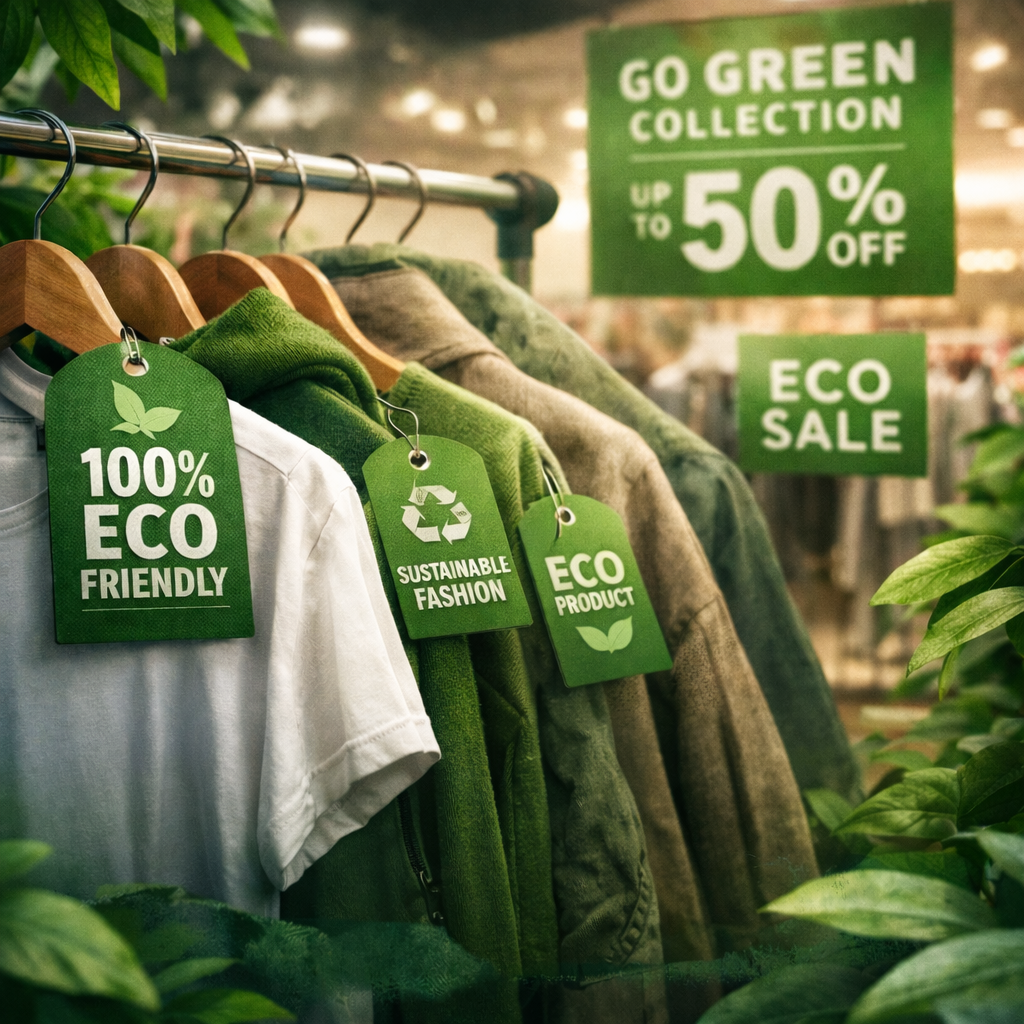
Sustainability has become fashionable. Unfortunately, so has deception.
Most fashion brands have redefined their communications as shoppers have increasingly recognized the environmental and social effects of what they wear, rather than their practices. This increasing disconnect between words and actions is called greenwashing: when a company spends more on appearing sustainable than actually minimizing its effects.
What Is Greenwashing?
It is established on three items: unclear assertions, selective disclosure, and an appeal to emotions. Eco–friendly, conscious, and natural are the words that are being used everywhere but hardly have any tangible evidence. The terms are more particularly successful with younger consumers, who indeed are making ethical decisions despite the fact that price and trends are still the driving factors in their final decision.
The gap between intention and action is exactly where greenwashing thrives.
Five Red Flags to Watch For
- Vague language. If a brand cannot explain its sustainability clearly, that vagueness is the answer.
- No supply chain transparency. When brands hide where and how their clothes are made, there is usually a reason.
- Token “green” collections. A small eco-line does not offset mass overproduction. It decorates it.
- No credible certifications. Standards like GOTS or Fair Trade exist precisely because good intentions are not enough.
- Sustainable packaging, unsustainable production. A paper bag does not cancel out exploitative manufacturing.
Why It Matters
Greenwashing is more than a deception to individual shoppers, it is a deceleration of system change. It enables unquestioning overproduction, undermines brand loyalty on brands that are doing legitimate work, and transforms environmental consciousness into a commercial plan. Consumers are sometimes influenced by it even when they can see it.
It is the effectiveness of the language that has come to pass.
How to Shop Smarter
Conscious consumption is the beginning of real change. You need to research before purchasing. Choose fewer, higher-quality pieces that last. Favor small and transparent makers. Ask brands direct questions in public. The motivation to cheat reduces when the consumers are aware that they are being observed.
A linen dress, photographed under natural light, is not automatically sustainable. A muted color palette is not an environmental approach. Look beyond the visual language of sustainability and look at the evidence. Do we have environmental targets which are time-bound?
Is there disclosure of manufacturing locations? Are third-party certifications such as GOTS or Fair Trade used and are they product-specific rather than brand-wide?
A brand cannot claim responsibility while operating on a system that depends on overproduction, weekly drops, and perpetual discounting. True sustainability is reflected in volume, pace, and permanence not in a limited “conscious” capsule.
A More Honest Future
Sustainable fashion is not about perfection. It is about progress, transparency, and accountability. When consumers demand proof instead of promises, the industry has no choice but to evolve.
Sustainability is not a marketing strategy. It is a responsibility.
The future of fashion depends not only on what brands claim, but on what we choose to hold them to.